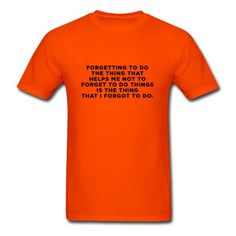
Tuesday, 13 February 2018

...now where was I?

Dear Reader,

It has been over a year since my last post and a lot has happened (mostly procrastinating), but I will try and give you a brief summary now.

um, well, there was the, um... thingy, you know, no? Actually I have very little memory of what happened today, let alone the day before or even 365 days before.  They are the things that happen in the "not now".  ADHD world tends to be 'in the present', 'in the now', like a little bubble of immediacy, where the things happen, and then become lost in the 'not now'.  As I write this I have a vague notion that I have already written about something like this already.  If I have it'll be in the 'not now', a dark void of unimaginable size (a bit like the Universe in that respect, and that is certainly unimaginably big, so big in fact that if you zoomed out you'd see fibers of galaxies threading their way through the darkness with massive expanses of nothingness between).

Ok, back on topic. There were some notable events...

ADHD Service Changes


In January 2017 was the last time I saw Dr Cubbin as the ADHD service was moved "in-house" within the West Hants Clinical Commissioning Group (WHCCG) in an effort to save money.  I now have to go to Basingstoke (37 miles away) instead of Marchwood (19 miles away). I'll write in more detail in another post about this change.

I found out my IQ


When you've thought of yourself as a lazy twat for most of your life, because you didn't continue with your education, you don't remember facts, you hate [too strong] dislike reading and writing, start things and never finish them, getting your IQ tested is probably not top of your list of things to do.  However, for one reason or another (which I shall write about in another post) I decided to take a Mensa Test.  The results came back saying I had an IQ of 149 which is in the top 1% of the population. I knew I wasn't completely stupid, but never in a million years did I believe I had that potential, and even less so as I believed my ADHD had been holding me back.

I joined a PPG


In order to try and raise the profile of Adult ADHD I thought I would start by joining the Patient Participation Group (PPG) for my local GP Survey.  I've volunteered at flu-clinics shepherding patients to the next available nurse/doctor as they queued for their yearly jabs, and I've been to a couple of meetings.

That is as much as I can remember that is noteworthy and related to ADHD.  I will try and keep this blog going as there is always something ADHD related going on,

Thursday, 29 December 2016

A brief history of ADHD

ADHD has come a long way since it was first noted a few hundred years ago. There are still a lot of unknowns, a lot of theories, and plenty of guesswork.

The condition has had numerous names over time as more was learnt about it, and yet ADHD is still not an accurate description. Attention Deficit Hyperactivity Disorder? There is no deficit in attention, our attention is on everything, all at the same time, whether is something we can see, touch or feel, smell, hear, taste, imagine, you name it, if we can be distracted by it we will shift out attention to it even if we don't want to. You don't have to be hyperactive to have ADHD, but it tends to be the overtly hyperactive ones that get diagnosed. Disorder? I would prefer Difference, like boys are different from girls kind of difference.

So on to the history bit starting over 200 years ago...


1798, Sir Alexander Crichton published "An inquiry into the nature and origin of mental derangement: comprehending a concise system of the physiology and pathology of the human mind and a history of the passions and their effects", which he continually updated and reprinted.  In the second chapter of book II entitled "On Attention and its Diseases", he defines attention:
  • When any object of external sense, or of thought, occupies the mind in such a degree that a person does not receive a clear perception from any other one, he is said to attend to it.
Later he writes about the perceived lack of attention in a person:
  • The morbid alterations to which attention is subject, may all be reduced under the two following heads:
    • First. The incapacity of attending with a necessary degree of constancy to any one object.
    • Second. A total suspension of its effects on the brain.
  • The incapacity of attending with a necessary degree of constancy to any one object, almost always arises from an unnatural or morbid sensibility of the nerves, by which means this faculty is incessantly withdrawn from one impression to another. It may be either born with a person, or it may be the effect of accidental diseases.
  • When born with a person it becomes evident at a very early period of life, and has a very bad effect, inasmuch as it renders him incapable of attending with constancy to any one object of education. But it seldom is in so great a degree as totally to impede all instruction; and what is very fortunate, it is generally diminished with age.
He goes on to say:
  • In this disease of attention, if it can with propriety be called so, every impression seems to agitate the person, and gives him or her an unnatural degree of mental restlessness. People walking up and down the room, a slight noise in the same, the moving a table, the shutting a door suddenly, a slight excess of heat or of cold, too much light, or too little light, all destroy constant attention in such patients, inasmuch as it is easily excited by every impression. The barking of dogs, an ill-tuned organ, or the scolding of women, are sufficient to distract patients of this description to such a degree, as almost approaches to the nature of delirium. It gives them vertigo, and headache, and often excites such a degree of anger as borders on insanity. When people are affected in this manner, which they very frequently are, they have a particular name for the state of their nerves, which is expressive enough of their feelings. They say they have the fidgets.
This ties in nicely with the next segment...

1844, Heinrich Hoffmann a successful psychiatrist, who was not in favour of the notion in his day that psychiatric patients were obsessed or criminal and preferred to view mental disorders as having a medical basis.  He is famous for his 1845 children's book called Struwwelpeter.  The following year he produced a second edition which included the story of Fidgety Phil, and Johnny Look-in-the-air  which depict characters with symptoms of ADHD, which he no doubt got the ideas for, from the patients he saw.

1902, Sir George Frederic Still is marked by many authors as the scientific beginnings of the history of ADHD, and is seen as the Father of British Pediatrics.  His study of children found some had a:
  • defect of moral control as a morbid manifestation, without general impairment of intellect and without physical disease.
1932, German physicians Franz Kramer and Hans Pollnow reported about:
  • A hyperkinetic disease of infancy
with the most characteristic symptom was motor restlessness.

1937, Charles Bradley reported positive effects of a stimulant medication called benzedrine when given to children with a range of behavioral disorders.

1944, Leandro Panizzon first synthesized the compound methylphenidate, now commonly used to treat ADHD, and is marketed as Ritalin, who name is derived from Leandro's wife Marguerite or "Rita".

1968, Diagnostic and Statistical Manual of Mental Disorders (DSM-II) contained an entry for "Hyperkinetic Reaction of Childhood" and was defined as "The disorder is characterized by overactivity, restlessness, distractibility, and short attention span, especially in young children; the behavior usually diminishes by adolescence"

1980, DSM-III defines ADD: Attention deficit disorder: with and without hyperactivity.

1987, DSM-III-R a revision of the 1980 DSM-III refined the definition to ADHD: Attention deficit-Hyperactivity Disorder, as symptoms of inattention, impulsivity, and hyperactivity.

1994, DSM-IV further refined the ADHD definition.

2000, DSM-IV-TR the descriptive text of ADHD was changed but the definition remained untouched.

2013, DSM-V the latest version defines ADHD as:
  • A persistent pattern of inattention and/or hyperactivity-impulsivity that interferes with functioning or development
  • Six or more of the symptoms have persisted for at least six months to a degree that is inconsistent with developmental level and that negatively impacts directly on social and academic/occupational activities. Please note: The symptoms are not solely a manifestation of oppositional behaviour, defiance, hostility, or failure to understand tasks or instructions. For older adolescents and adults (age 17 and older), five or more symptoms are required
  • Several inattentive or hyperactive-impulsive symptoms were present prior to age 12 years
  • Several inattentive or hyperactive-impulsive symptoms are present in two or more settings (e.g. at home, school, or work; with friends or relatives; in other activities)
  • There is clear evidence that the symptoms interfere with, or reduce the quality of, social, academic or occupational functioning
  • The symptoms do not occur exclusively during the course of schizophrenia or another psychotic disorder and are not better explained by another mental disorder (e.g. mood disorder, anxiety disorder, dissociative disorder, personality disorder, substance intoxication or withdrawal)

For more detailed reading, see the source of this information at https://www.ncbi.nlm.nih.gov/pmc/articles/PMC3000907/ - The history of attention deficit hyperactivity disorder by Klaus W. Lange, Susanne Reichl, Katharina M. Lange, Lara Tucha, and Oliver Tucha

Wednesday, 21 September 2016

Forgot to see the man lady about a dog.

So today, apart from work, I had 2 things to remember. One was that Autoglass were coming to repair the glass roof on my car and the other was to take the dog to the Vets at 6pm for a post op check up. For Autoglass , all I had to do was be home which was easy as I had arranged to work from home. The vets appointment was in my phone calendar, so there was no way I could forget that. I finished my work for the day about 4:45pm and thought that it would be really good to take the dog for a walk early, so I'd have a bit more time in the evening. So by 5.15pm I was off on our usual 7 Km walk around Manor Farm Country Park which take about 1.5 hours or so, depending on how long we play fetch sticks in the rivers and streams and who we meet along the way. So I'd walked about 1 Km (I know this because my Walking App on my phone bleeted at me in its female but yet somewhat robotic voice that I had reached 1 Km), when it suddenly dawned on me I was meant to be at the Vets. I looked at my watch and it was 5.30pm, and then, as if our brains had connected from a kilometer away, my wife phones me to tell me I should be going to the Vets. Of course I hurried back, and fortunately the Vets is just around the corner from where I live, so I made it in plenty of time, and saw the lady Vet who I sometimes bump in to while out dog walking. So even with reminders and barely anything worthy of a todo list, I forgot. Luckily I remembered in time, but next time I might not.

Monday, 19 September 2016

Why things take longer when you have ADHD

So this is just a typical example of what happens to me.  Today I'm having diabetic eye screening done (I'm pre-type 2 in case you were wondering), so I needed to remember not to put my eyes in (I actually mean contact lenses but I always find saying "putting my eyes in" amusing), so what did I do, yes I put my eyes in.  "Oh well, I'll just take them out later.", I said to myself.  Anyway one of the lens was being uncomfortable today so I thought I would go back upstairs to take them out and that way I would not be frantically rushing to do this as my appointment time closes in.  I tell my wife I'm going upstairs to do this and she asks, "can you bring your washing down.". I acknowledge her request with a Star Wars Battle Droid "roger, roger", smiling amusingly at myself as I walk away. "Don't forget the washing!  Don't forget the washing!", I tell myself as I climb the stairs.  I get to the bedroom, pick up the clothes, and come back down and put them near the washing machine.
 I sit back down and think, "hmm, my contact lens is a bit uncomfortable.", and then I realise I forgot to do the thing I wanted to do in the first place, so trundle back upstairs to take my lenses out.

Stuff like this happens every day, and this is why things take so long to do as I am forever having to go back and complete tasks that I went to do but doesn't happen because I got distracted by something, was asked to do something else as well, the phone rings, there is a knock at the door, well you get the drift.

Tuesday, 13 September 2016

More Speed, less haste.

So had a chat with my Psychiatrist about the new ADHD medication and as I wasn't getting any side effects and I thought there may be some subtle improvement she suggested to increase the Elvanse Adult from 30mg to 50mg starting to day.  Now I only have 30mg tablets currently so I can't just double the dose. So to get around this I pull apart the capsule and mix with water and drink two thirds of it i.e. 20mg, so I dissolved it into 150ml of water and drank 100ml and took the other capsule as normal.

Anyway, today I feel like I'm buzzin' (yep it's an amphetamine based drug which is what Speed is).  No anxiety or panic attacks and I'm getting some stuff done.  After a couple of hours I took my blood pressure and it was a normal (for me) 139/69 with a pulse of 71.

It's just day 1, so lets not be too hasty and say its working just yet. I'm working from home today and there are many distractions, "Hey look, a Chinook helicopter!". There are no squirrels in my garden so I have to go with what I can see, and he wasn't flying that high, maybe 1000ft :)

Saturday, 10 September 2016

It's not just one thing.

I find when I tell people I have ADHD they seem a bit perplexed. I might get a direct response of "You're not hyperactive. Are you?", or an indirect one like "isn't that, like being hyperactive?" implying that they didn't think I was hyperactive, then there's the disbelieving response of "isn't that something kids get?", and the denial "Oh really?".  I can understand where they're coming from because if you told me I had ADHD  a decade ago, I probably would have laughed, a bit like when you think you're having an "OCD" moment (which incidentally has a number of different types and symptoms and is more than just needing to make things straight or in order).

If I told someone I had a cold, they'd expect maybe a sore throat, blocked or runny nose, perhaps sneezing, a cough, a hoarse voice and that I might be generally feeling unwell.  If I didn't have a cough they wouldn't look at me in disbelief. A cold is more than just a cough, or sneeze and similarly ADHD is more than just hyperactivity. In fact in adulthood, hyperactivity is more internalized, but can manifest in other ways like jiggling of legs, or tapping fingers, clicking pens, much to the annoyance of your colleagues. It can also feel like you just have to get up and do something but you have no idea what. So as an adult you may not appear to be hyperactive.

I'm not going to list all the symptoms here because there is plenty of sites that already have it, and I'll probably mention them in future posts, but like a cold, you don't have to have all of them to have ADHD and some of them might be worse than others. Oh, and there's 3 types of ADHD too.

Random update.

Can't believe that even though I have a daily reminder on my phone to update my blog that a week has passed already. I guess the Round Tuits were in short supply.

Anyway, its been a week on the Elvance and so far no side effects that I can tell.  Not sure if they're having an effect or not because if they are it's very subtle.  I do seem to have written a lot more this week than I usually do, I even managed to arrange for the dog to have his bits chopped off, but then it could have been the reminder from my wife that prompted me to pick up the phone. So watch this space.  I have a review on Monday so we'll see if the Doc recommends continuing or upping the dose.